.png)
Release Date : ২২ ফেব্রুয়ারি ২০২৬
Traditional Palmyra Palm Trees Disappearing in Chandina; Environmentalists Concerned
Md. Osman Gani , Upazila Correspondent, Chandina ||
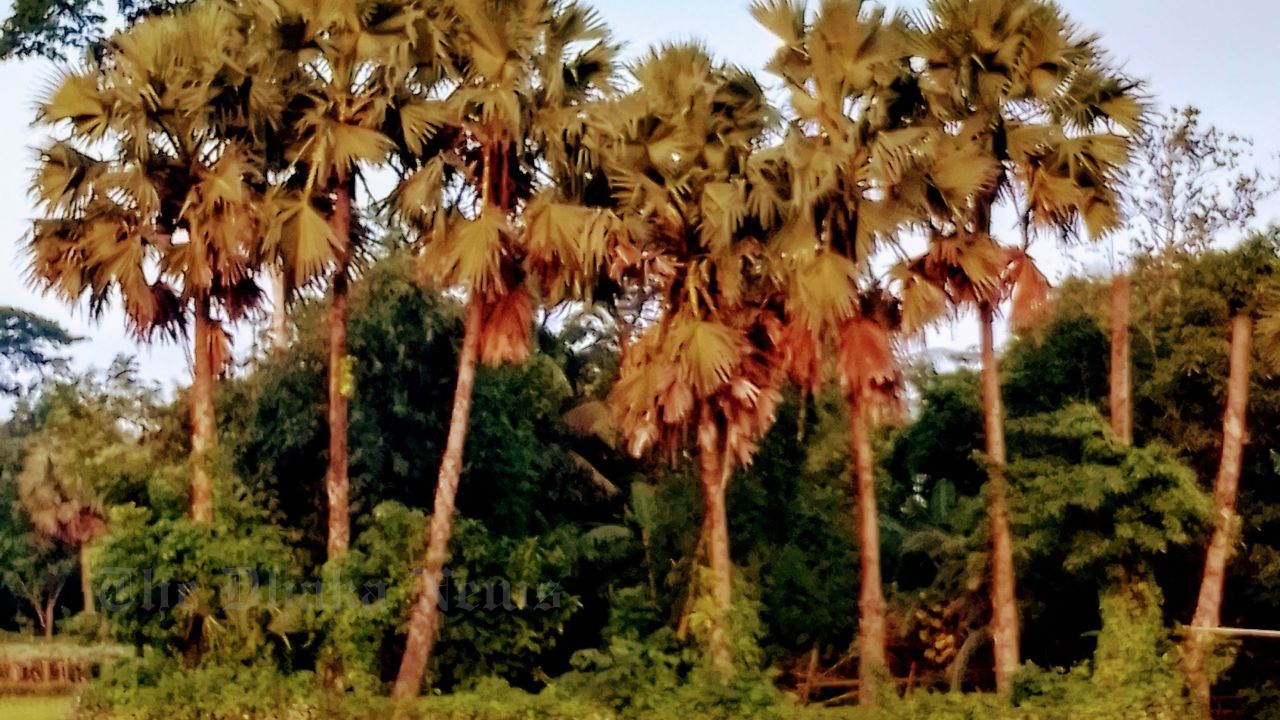
The vast fields, rural paths, and ancient settlements of Chandina Upazila in Cumilla were once defined by rows of towering Palmyra palm trees (Talgaach). These scenes were a living reflection of the timeless poem, "Oi dekha jay talgaach, oi amader gaa" (There stands the palm tree, there is our village). While these trees gave Chandina’s landscape a unique identity, they also played a profound role in environmental protection, public safety, and the local economy. However, in recent years, due to unplanned development, public unawareness, and the pursuit of economic profit, these traditional trees are rapidly vanishing—sparking deep concern among local environmentalists and conscious citizens.The Palmyra palm is not just a tree; it is a symbol of rural Bengal’s culture and heritage. Being long-lived, these trees have silently maintained ecological balance for centuries. Their role as lightning conductors during the monsoon is unparalleled. Their high peaks draw the intense strike of lightning directly into the ground, protecting humans and livestock. Furthermore, their sturdy trunks act as a shield against severe storms. At one time, dense rows of these trees lined most rural roads and crop field boundaries in Chandina, providing shade to weary pedestrians and farmers in the scorching summer heat. These trees were also the primary sanctuary for the artistic nests of the Weaver bird (Babui), a vital component of local biodiversity.However, the passage of time has disrupted this familiar sight. Road widening, the construction of buildings on agricultural land, and the aggression of brick kilns have become the primary enemies of these trees. Many farmers and landowners no longer prioritize them, viewing them as economically less profitable. Mature trees are being cut down indiscriminately for timber. While it takes a long time for a Palmyra palm to grow, there is a noticeable lack of effective initiatives at the government or private level to plant or preserve new saplings. As old trees die naturally, the total number is decreasing at an alarming rate due to the absence of a new generation of trees.Environmentalists fear that if the Palmyra palm continues to go extinct, it will have a severe adverse impact on the environment and public life in Chandina. On one hand, the charming beauty of nature will be lost; on the other, the risk of death by lightning will increase significantly. Additionally, these trees play a crucial role in preventing soil erosion and keeping the environment cool by absorbing carbon. The decline of these trees could make the harmful effects of climate change more pronounced. Even the traditional rural delicacies of Chandina, such as Tal-er Pitha, Payesh, and tender palm seeds (shash), are becoming scarce.Taking immediate action to protect this heritage is essential. Environmentalists believe that legislation alone is not enough; widespread public awareness is necessary. Local administration, the Forest Department, and the general public must come forward together to plant palm saplings. It is the need of the hour to adopt an integrated plan to plant these saplings along roadsides, school and college premises, and on government-owned fallow lands. If these initiatives are implemented, it may still be possible to restore the disappearing rows of traditional palm trees in Chandina; otherwise, these trees will eventually be confined only to the pages of books and the memories of the elderly.
Copyright © ২০২৬ । All rights reserved.