.png)
Release Date : 24 Jul 2026
Fire in raw material market in Chandina: Common people are suffering.
Md. Osman Gani , Upazila Correspondent, Chandina ||
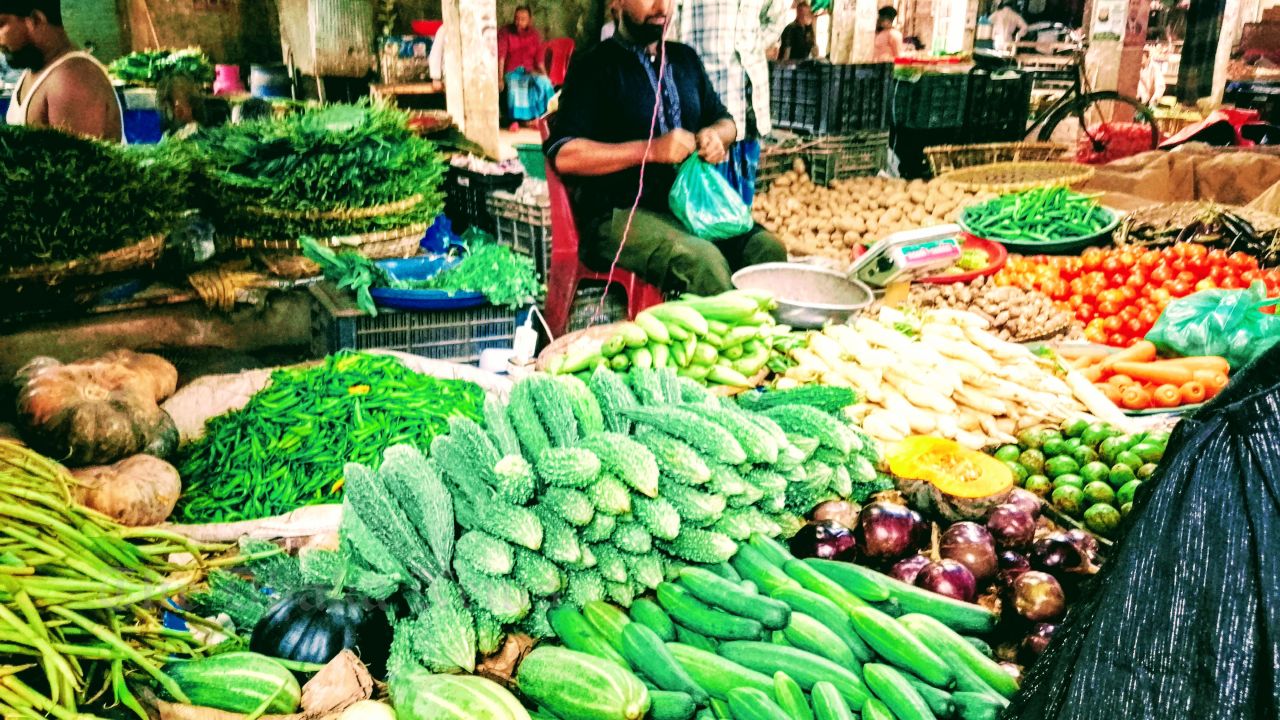
Due to the continuous rains and landslides coming down from the hills in the past few days, vegetable fields in different parts of the country have been submerged under water. As a result, there has been a massive collapse in production, which has directly affected the local retail market. Chandina Upazila of Comilla has not been left out. The prices of daily essential raw materials in the market here have now skyrocketed, which has completely gone beyond the purchasing power of the common people. Due to these unbridled fire prices, the backs of low and fixed income people are now against the wall. The hardworking people of Chandina, who struggle to buy their daily rice, pulses, vegetables and fish, are living a life of extreme uncertainty and disorientation.A visit to the traditional Badarpur market of the upazila shows a sad picture. Although the supply in the market is comparatively less, the prices are increasing due to competition. The prices of almost every vegetable have almost doubled compared to last week. Currently, a kilogram of black brinjal is being sold in this market for 130 to 140 taka, which is beyond the imagination of ordinary buyers. Although it is not a winter vegetable, the price of carrots in the market has reached 100 to 120 taka. In addition, ordinary people have to pay 80 to 100 taka to buy bitter gourd. Even common vegetables like lati, dhundul and jhing are not available below 60 to 70 taka per kg. The most terrible situation is in the market of raw chilli; this essential ingredient for cooking is being sold at 180 to 220 taka per kg. As a result, retail buyers do not dare to buy more than a few hundred grams of chilli or vegetables.When talking to the raw material sellers in the market, they mainly blame the recent weather and supply shortage for this. Local traders said that due to continuous torrential rains, the fields of local fields as well as the main vegetable producing regions of the country have been submerged under water and rotted. As a result, the supply of goods to the warehouses has decreased alarmingly. However, in response to the dissatisfaction of the buyers, they said that they themselves have to buy raw materials from the wholesale market at an additional cost. Since the wholesale price is high, they have no choice but to sell at a higher price by taking into account transportation costs and a small profit.This high price of vegetables has also hit the meat market in Chandina. The common man who cannot buy vegetables has no choice but to satisfy his hunger with fish or meat. It seems that the prices of everything in the market are increasing at the same time. Especially for the lower and middle class families, the price of pangasius fish, known as 'poor man's hilsa', is now skyrocketing. Where a few days ago, a kilogram of pangasius fish was available for 150 to 170 taka, now it is being sold for 200 to 210 taka per kilogram. Tilapia fish is also not left out; it is being sold for 220 to 250 taka per kilogram. Even to buy small-sized rui and katal fish of normal quality in the market, one has to pay 300 to 350 taka per kilogram. And a kilogram of horn fish has gone up to 350 to 400 taka. Going to the local fish or meat market has now become a luxury dream for the common man.As prices in the vegetable and fish market continue to rise, there has been intense dissatisfaction and frustration among the common buyers. However, the common man is reluctant to accept the excuse of natural disasters or rain. They allege that a group of unscrupulous syndicate traders are taking advantage of the disaster to create an artificial crisis and loot excess profits. It has become urgent for the local administration to monitor the market and take strict legal action to stop this skyrocketing price difference between the wholesale and retail markets and the misdeeds of unscrupulous traders. Otherwise, the standard of living of the low-income people of Chandina will become even more miserable and unbearable.
Copyright © ২০২৬ । All rights reserved.