Three Scientists Win 2026 Nobel Prize in Physiology or Medicine
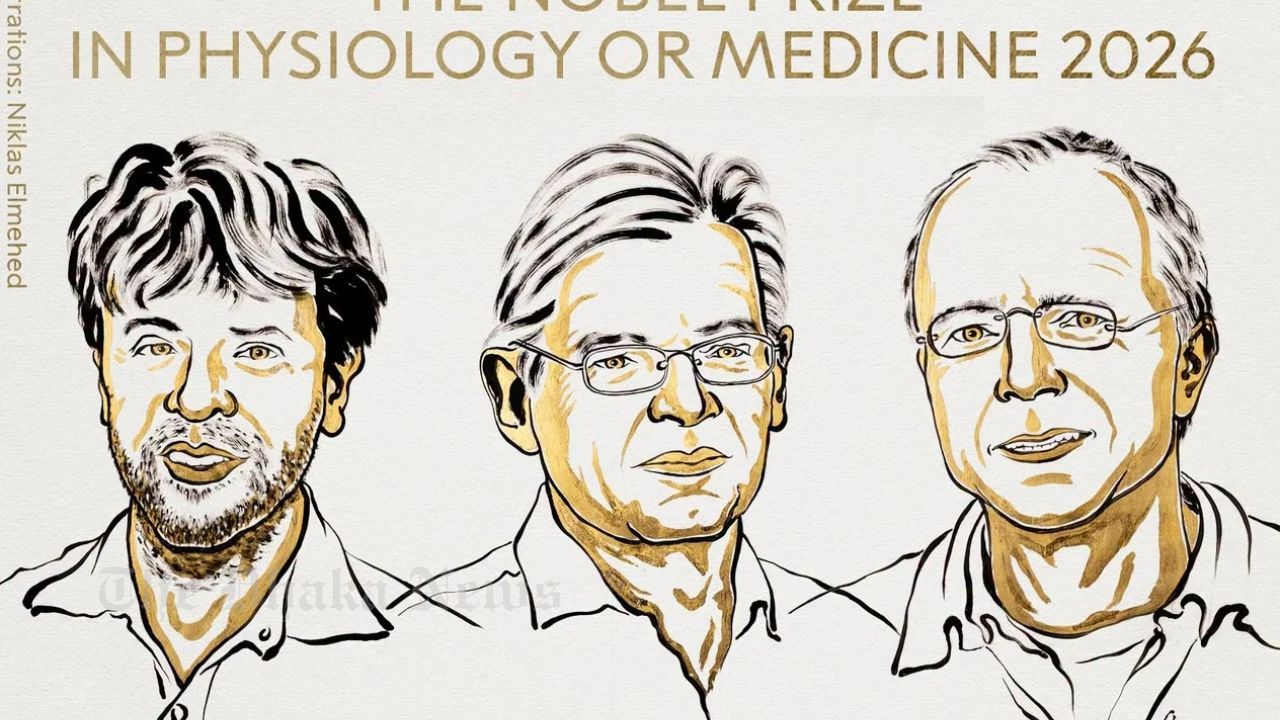
Three scientists, Karl Deisseroth, Peter Hegemann and Georg Nagel, have jointly won the 2026 Nobel Prize in Physiology or Medicine for their pioneering discoveries involving light-sensitive ion channels and optogenetics.The Nobel Assembly at the Karolinska Institute announced the decision on Monday, recognizing the scientists for discoveries that have opened new possibilities for understanding and controlling cellular activity through light.Thomas Perlmann, Secretary-General of the Nobel Committee for Physiology or Medicine, announced the laureates from Stockholm.The announcement was made at 11:30am local time in Stockholm, corresponding to 3:30pm Bangladesh time. The announcement was also broadcast live through the official Nobel Prize website and its YouTube channel.The Nobel Prize announcements traditionally begin on the first Monday of October, with the Physiology or Medicine prize announced first. The laureates in the remaining categories are then announced on subsequent days.The Nobel Prize in Physiology or Medicine has been awarded since 1901. Through 2026, the prize has been awarded 117 times to a total of 234 laureates.The Nobel Prizes were established based on the fortune left by Swedish scientist and dynamite inventor Alfred Nobel. The awards began being presented in 1901, five years after his death. The economics prize was later added to the Nobel Prize family in 1969.The Nobel laureates traditionally receive their awards on December 10, the anniversary of Alfred Nobel's death. Each laureate receives a gold medal, a diploma and a cash award, which currently stands at 11 million Swedish kronor per prize.Each year, a large number of candidates are considered for the Nobel Prizes before extensive evaluation and selection by the respective awarding institutions. One or more individuals may ultimately be selected in each category.Emil von Behring, a German biologist, became the first recipient of the Nobel Prize in Physiology or Medicine in 1901. He was honored for his work on serum therapy against diphtheria.The history of the prize also includes notable age records. Frederick Banting received the Nobel Prize in Physiology or Medicine in 1923 at the age of 31, making him the youngest laureate in the category. Peyton Rous became the oldest recipient when he received the prize in 1966 at the age of 87.
.png)