If you cannot do it, say so: Golam Parwar tells government
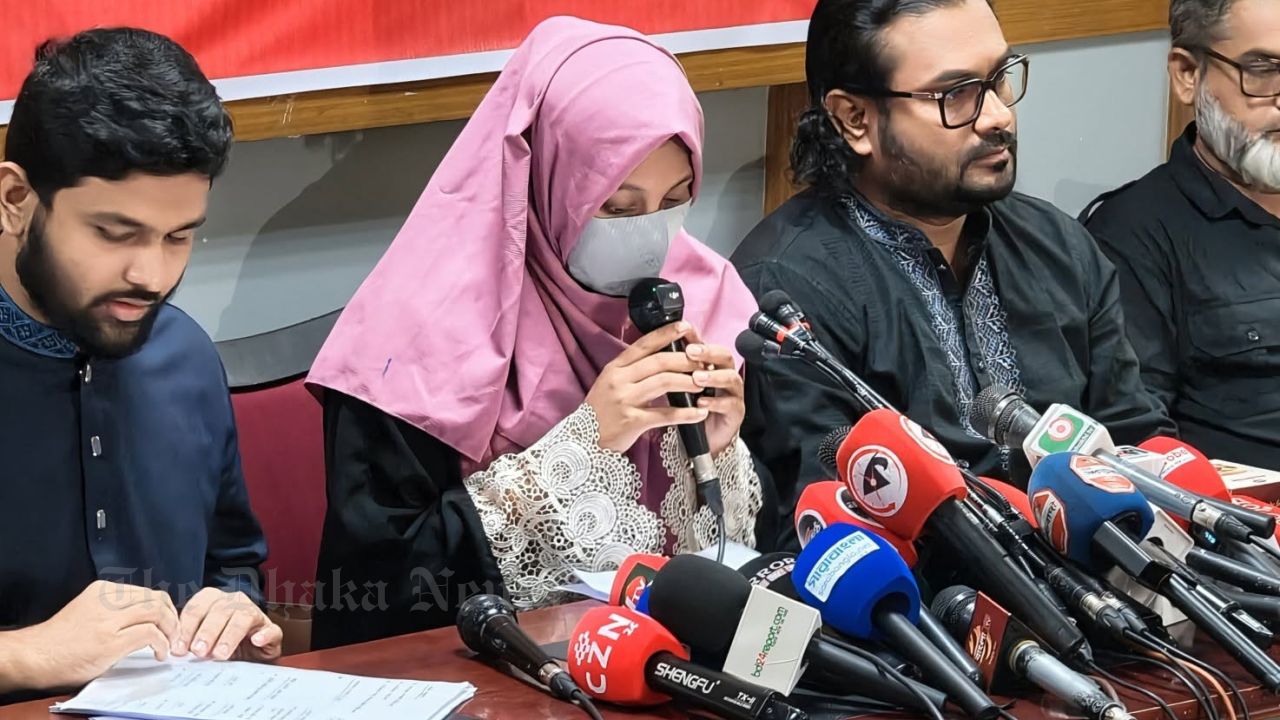
Jamaat-e-Islami Secretary General Mia Golam Parwar has criticized the government over its objections to the 11-party alliance’s long march, saying the government should clearly admit if it is unable to implement the alliance’s seven-point demands.He said the failure to address the demands has created the need for the long march.Golam Parwar made the remarks at a briefing at the official residence of the opposition leader on Minto Road in Dhaka on Monday (October 5) afternoon.Referring to the government’s question about the need for a long march after only six months, he said, “They ask why a long march is needed when it has been only six months. But the people ask, what is the need for this failure regarding the seven-point demands we have raised?”Addressing the government, he further said, “If you cannot do it, say that you cannot and ask us to forgive you. But they do not even say that. Instead of decreasing, the problems are increasing one after another. That is why this long march is timely and justified.”Earlier, a meeting of the liaison committee of the 11-party alliance was held to discuss preparations for the long march scheduled to travel from Dhaka towards Khulna and Kushtia on October 31. The meeting reviewed various aspects of the programme centered on the alliance’s seven-point demands.According to Golam Parwar, the meeting condemned the arrest and remand of freedom fighter Major (retd.) Akhteruzzaman and demanded his immediate release on behalf of the 11-party alliance.The meeting also condemned the attack on the vehicle of NCP Chief Coordinator Nasiruddin Patwary in Kushtia and called for legal action against those involved. The leaders also condemned the reported attack on media workers by activists of the Bangladesh Jatiotabadi Chhatra Dal at Rajshahi University.The meeting further expressed concern over the deteriorating law and order situation in the country.Giving details of the long march, Golam Parwar said the programme would begin with an inaugural rally at 7am on October 31 at the southern gate of Baitul Mukarram in Dhaka.The procession will then travel through the Padma Bridge and the Mawa route, passing through Shariatpur, Madaripur, Faridpur, Gopalganj, Fakirhat and Khulna. After crossing the Rupsha Bridge, it will proceed through Jashore and Jhenaidah before reaching Kushtia. The concluding rally will be held at the Kushtia Zilla School ground.Several roadside rallies will also be held along the route. These include a rally at Naodoba in Jajira upazila of Shariatpur at around 9am after crossing the Padma Bridge, followed by gatherings at Kantakhali Four-Way Intersection in Fakirhat, Bagerhat, Shib Bari Mor and Swadhinata Chattar at Phultala Bus Stand in Khulna, Chanchra Mor in Jashore and Chuadanga Bus Stand in Jhenaidah.The Jamaat leader said activists of the opposition alliance would not respond to any provocation during the programme. He said the long march would be carried out peacefully with the utmost patience.Responding to another question, Golam Parwar said the government should accept the demands of auto-rickshaw drivers.Among those present at the 11-party liaison committee meeting were NCP Political Council member Abdullah Al Amin, Bangladesh Khelafat Majlis Joint Secretary General Ataullah Amin, Bangladesh Labour Party Chairman Mostafizur Rahman, Liberal Democratic Party Acting Secretary General Billal Hossain Miaji, AB Party Joint General Secretary Abdullah Al Mamun, Bangladesh Nezam-e-Islami Party Secretary General Musa Bin Izhar and Bangladesh Development Party Secretary General Nizam-ul Haque, among others.
.png)