.png)

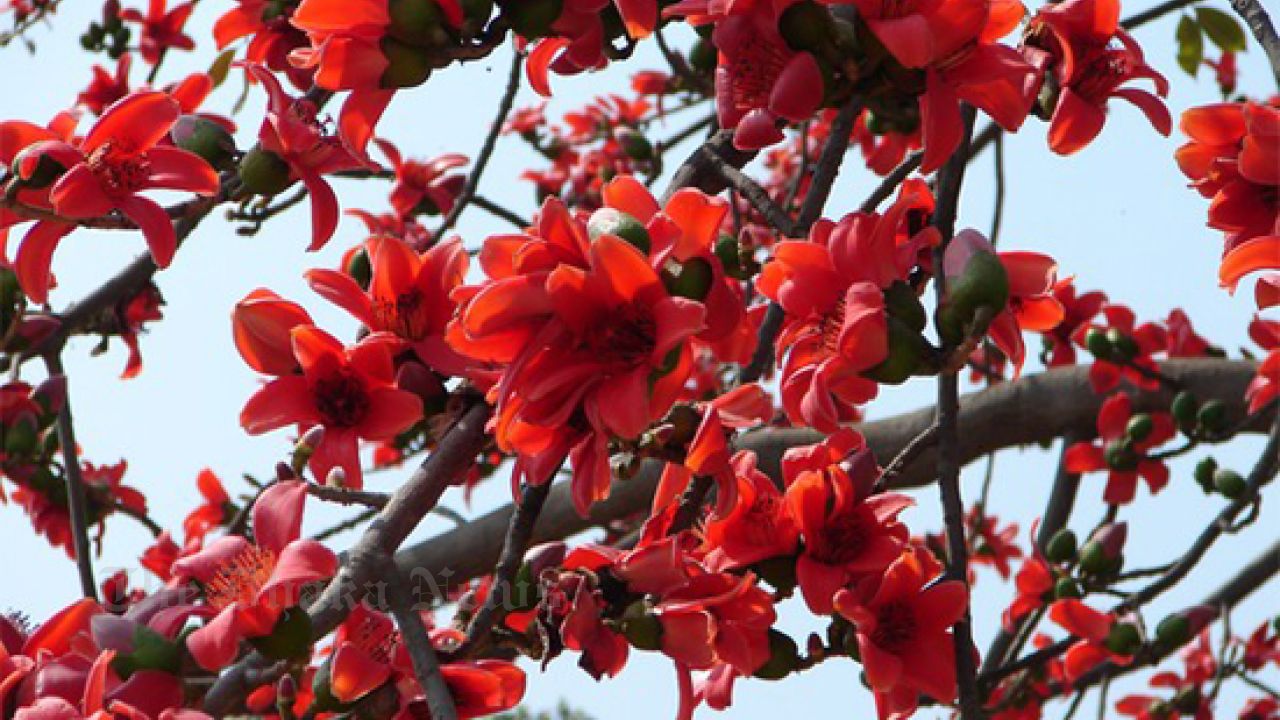
With the arrival of spring, the transformation that nature undergoes finds a true reflection in the fields of Chandina. There was a time when Chandina meant an expanse of shrubs and dense greenery stretching to the horizon. Cutting through that woodland stood countless towering palash trees, raising their heads proudly. On the fiery days of Falgun, when all the leaves would fall away and only the bright crimson blossoms would bloom, it seemed as though the entire locality was immersed in a festival of red. But in the relentless passage of time, that picturesque scene has faded considerably. As the growing population searches for shelter, nature’s ancient forests have borne the brunt. One after another, shrubs have been cleared to build houses and factories, claiming innumerable palash trees as casualties.
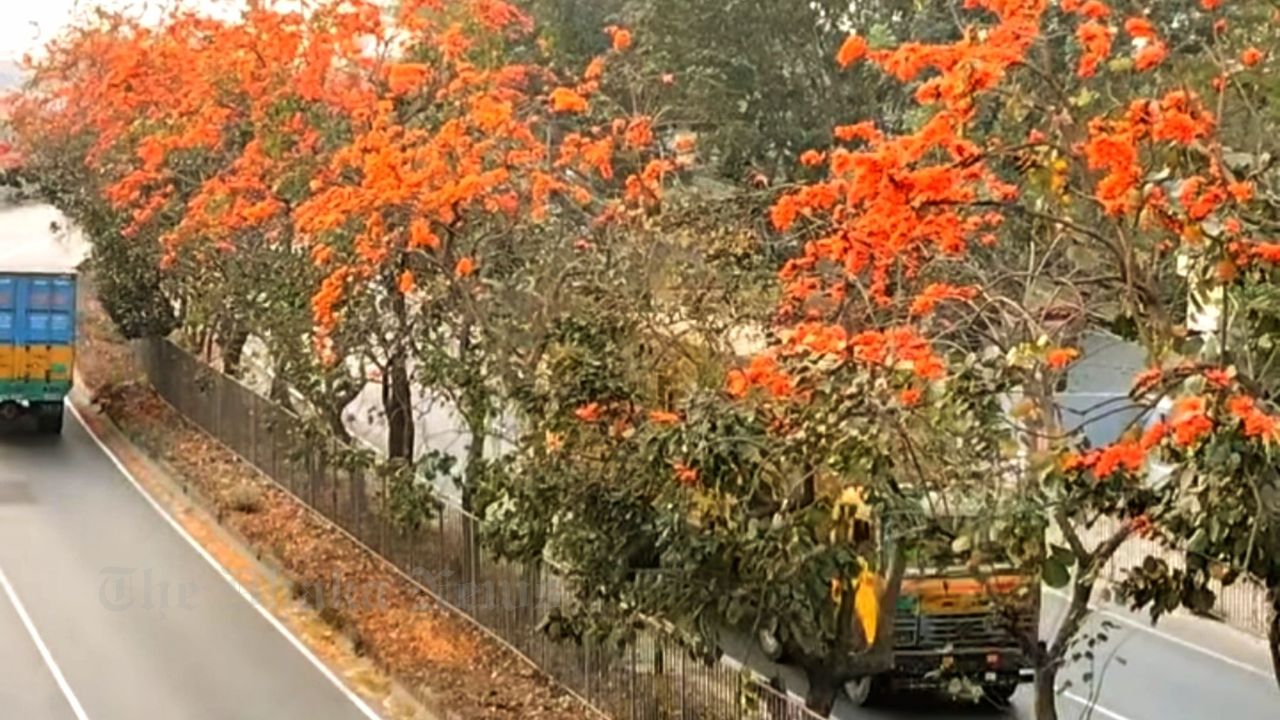
Over time, the once-familiar forests of palash in Chandina have become almost mythical. The miles upon miles of red glow are no longer visible. Yet, as living reminders of heritage, a few palash trees still survive in courtyards or on abandoned homesteads. Especially along rural roads, one may occasionally spot a solitary palash tree, neglected for most of the year but proudly announcing its presence with the touch of spring. When its branches burst into crimson bloom, it becomes clear that nature’s vitality has not completely faded. These flowers stand as vibrant advertisements of Chandina’s fading legacy.
The palash tree is not merely a symbol of beauty; it is also an important refuge for biodiversity. Drawn by its crimson allure, crows, mynas, drongos, bulbuls, and many unnamed species of birds gather around it. As they sip nectar from the blossoms, filling the air with cheerful chirping, an extraordinary liveliness is created. The chorus of birds and the dance of falling petals in the breeze make it seem as though nature itself is playing a melodious instrument. Particularly in the gentle light of the morning sun, this scene takes on a magical form that instantly relieves the fatigue of mechanical urban life.
Centered around the palash blossom, a unique social culture has developed in the rural communities of Chandina. When the bright red flowers fall to the ground with soft thuds, the joy of village children knows no bounds. Rising early in the morning, they gather beneath the trees in groups. Collecting the freshly fallen blossoms, they immerse themselves in innocent play—some string garlands, others decorate miniature houses with flowers. Such simple childhood joys would seem astonishing to a generation absorbed in smartphones. The significance of palash blossoms, however, extends beyond children’s games. For elderly village women, the fallen flowers hold a different value. When the blossoms become slightly dry, they carefully collect them. In rural areas, the petals are still sometimes used as fuel in cooking. Many also believe that parts of the tree possess medicinal properties helpful in relieving stomach ailments.
The true importance of the palash tree is also felt in its natural fiber. Pillows and quilts made from palash cotton are considered comfortable, eco-friendly, and beneficial for health. Although synthetic fibers dominate urban markets, palash cotton still holds value in Chandina’s rural economy. Regrettably, however, the planting of new palash trees has declined alarmingly. Because the tree grows slowly and offers little immediate economic return, people are no longer enthusiastic about cultivating it. As a result, this vibrant symbol of spring is gradually disappearing from the heart of Chandina.
In conclusion, the palash blossom is not merely a flower; it is an inseparable part of Chandina’s rural life, memory, and culture. Despite the encroachment of modernity and the shrinking of green spaces, protecting the remaining trees has become a necessity of our time. If we fail to preserve Chandina’s springtime beauty draped in a red carpet of palash, future generations may only see it in still photographs—wondering what that crimson magic once looked like. Only by safeguarding this unique gift of nature can we ensure the continuation of birdsong and the golden days of childhood painted in red.

মঙ্গলবার, ০৩ মার্চ ২০২৬
Published : ০৩ মার্চ ২০২৬



Stay connected with The Dhaka News