.png)

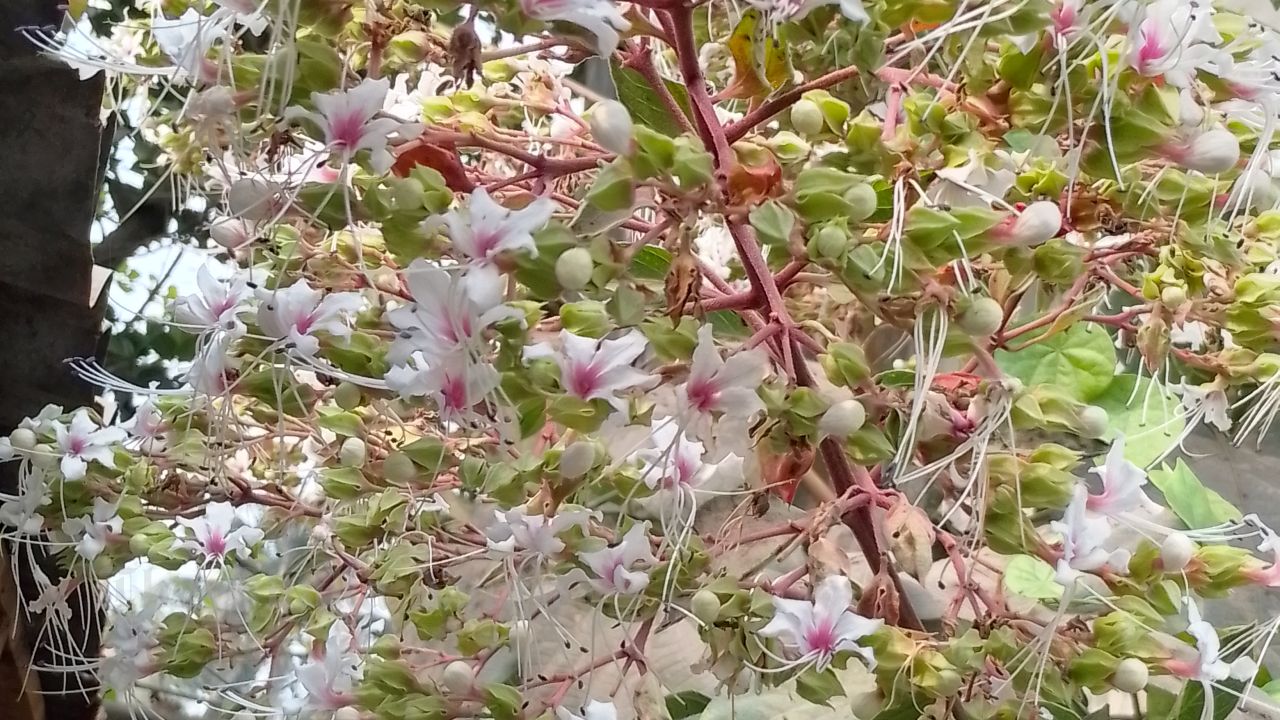
The roadsides, bushes, and forested areas across Chandina upazila of Cumilla are now radiating charm with one of spring’s most familiar wildflowers—the bhat flower. With the arrival of spring, often called the king of seasons, nature seems to have adorned itself in a fresh new look. The lingering chill of winter is slowly fading, replaced by gentle warm breezes. At this very moment, the quiet beauty of bhat flowers has begun to bloom across the landscape.
During spring, nature dresses itself in a variety of colorful blossoms. Yet in rural Bengal, one particular flower is commonly seen everywhere—the bhat flower. In different parts of Chandina, these plants are naturally growing along rural roads, village paths, canal banks, beside crop fields, and in bushes and thickets. These plants require no cultivation or special care. Following nature’s own rhythm, bhat plants sprout from the soil at a specific time of the year, and with the arrival of spring, countless flowers bloom on them. As the season ends, the plants gradually dry up and disappear in accordance with nature’s cycle.
According to local residents, the blooming of bhat flowers feels like a silent message from nature announcing the arrival of spring. Rows of white or slightly purple-tinged flowers can be seen along village roads and pathways. Swaying gently in the breeze, the flowers bring instant joy to passersby. In the early morning, when they are covered with dew, the beauty of the bhat flowers appears even more vibrant and lively.
Beyond their visual appeal, these flowers also play an important role in maintaining biodiversity. From early morning, various species of butterflies, bees, and other small insects gather around the blossoms to collect nectar. This natural interaction contributes significantly to the food chain and pollination process in the environment. Agricultural experts say that wildflowers like the bhat flower help maintain ecological balance in nature.
In addition to their beauty and ecological value, bhat plants are also known for their medicinal properties. For generations, people in rural areas have used the leaves, roots, and flowers of the plant in traditional herbal remedies. In folk medicine, extracts from the plant are believed to help treat fever, skin diseases, pain, and certain inflammatory conditions. However, experts note that more scientific research is needed to verify and understand these traditional uses in modern medical science.
Elderly residents from different villages in Chandina say that bhat flowers were once even more common along rural roads and fields. However, due to urbanization, road expansion, and the clearing of bushes and wild vegetation, the number of these plants has declined in many places. Still, every spring nature finds its way, and somewhere or another the bhat flowers bloom again, as if reminding people of nature’s timeless beauty.
Many young people in the area are now capturing photographs of the bhat flowers during spring and sharing them on social media. As a result, the simple yet captivating beauty of this wildflower is gaining renewed attention. Many believe that people should become more aware of the importance of protecting such elements of rural nature and biodiversity.
Every year, with the arrival of spring, bhat flowers bloom according to nature’s own rhythm and create a brief yet enchanting atmosphere around the countryside. The flowers blooming along the roadsides of Chandina serve as a gentle reminder that enjoying the beauty of nature does not always require grand arrangements—sometimes a single wildflower is enough to fill the human heart with joy.

বৃহস্পতিবার, ০৫ মার্চ ২০২৬
Published : ০৫ মার্চ ২০২৬




Stay connected with The Dhaka News