Bangladesh Gets Three More Years for LDC Graduation, but Economic Reforms Cannot Wait
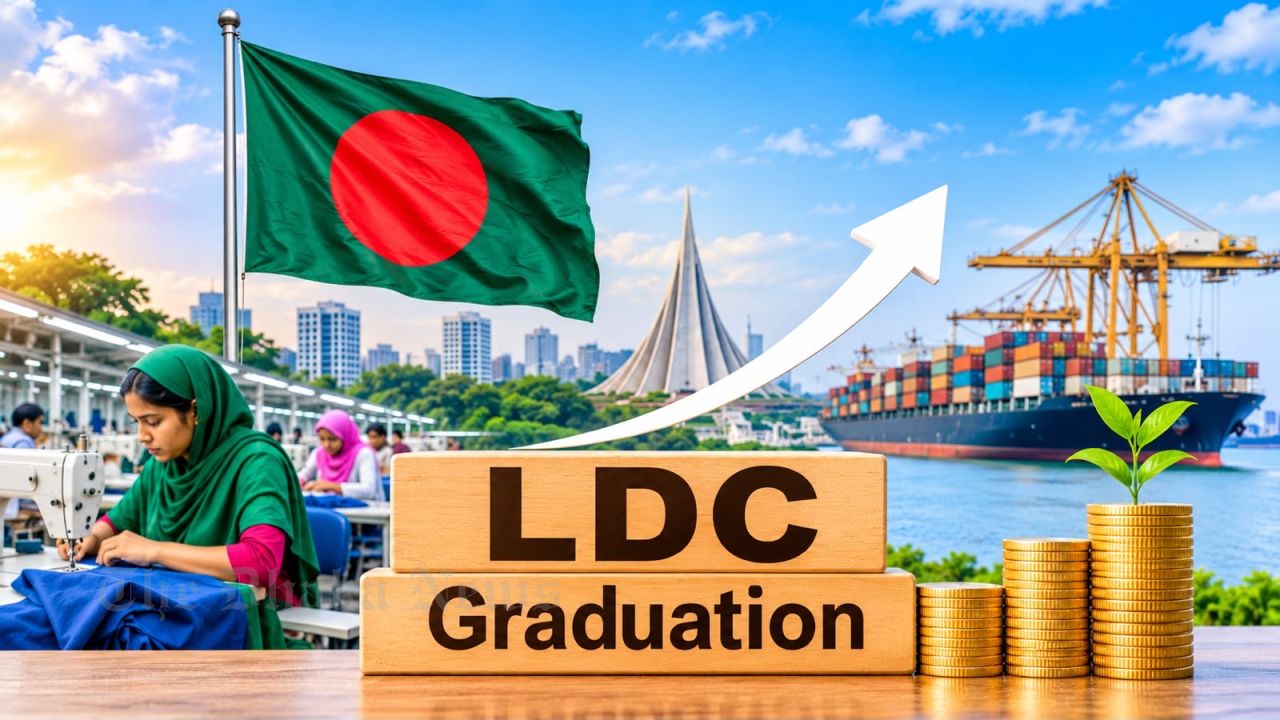
DHAKA, Nov 1, 2026 - Bangladesh has secured an additional three years to prepare for graduation from the United Nations’ Least Developed Country (LDC) category, creating an important opportunity to address economic vulnerabilities, strengthen export competitiveness and accelerate structural reforms.On October 29, 2026, the United Nations General Assembly approved an extension of Bangladesh’s preparatory period for LDC graduation until November 24, 2029. The decision gives the country more time to prepare for the economic and trade-related challenges associated with leaving the LDC category.Bangladesh was originally scheduled to graduate in November 2026 after meeting the United Nations’ three graduation criteria: gross national income per capita, human assets and economic and environmental vulnerability. The country had demonstrated considerable progress in these areas over the past decades.However, meeting the graduation criteria does not automatically mean that an economy is fully prepared to operate without the benefits and international support measures available to LDCs.
Export Competitiveness Remains a Major ConcernOne of the most significant challenges for Bangladesh will be maintaining its export competitiveness in international markets.For decades, Bangladesh has benefited from preferential trade arrangements, including duty-free and quota-free market access in several major export destinations. These advantages have played an important role in expanding the country’s export-oriented industries, particularly the ready-made garment (RMG) sector.According to the United Nations’ graduation readiness assessment, approximately three-quarters of Bangladesh’s merchandise exports benefit from preferential market access under various international schemes.The garment industry remains the backbone of the country’s export economy. However, heavy dependence on a single sector creates vulnerabilities, particularly when global demand changes, trade policies shift or international competition intensifies.The International Monetary Fund (IMF) has also highlighted the concentration of Bangladesh’s exports in the ready-made garment sector, which accounts for approximately 85 percent of total exports.As trade preferences gradually change following graduation, Bangladeshi exporters may face higher tariffs and increased competition. This could put pressure on export earnings, industrial investment and employment.
Economic Diversification Is No Longer OptionalReducing dependence on the garment industry will be essential for building a more resilient economy.Bangladesh has opportunities to expand exports in pharmaceuticals, leather goods, footwear, light engineering, information technology, agricultural processing and other manufacturing sectors.However, diversification requires more than identifying potential industries. It demands improvements in infrastructure, access to finance, technological capacity, workforce skills and the overall business environment.Small and medium-sized enterprises (SMEs) also need greater access to financing, modern technology and international markets. Supporting these businesses could help create employment opportunities and broaden the country’s export base.At the same time, attracting foreign direct investment (FDI) will be important for transferring technology, improving productivity and integrating domestic industries into global value chains.
Reforms Must Address Structural WeaknessesThe additional three-year preparation period should not become a reason to delay difficult economic decisions.Bangladesh needs stronger institutions, more efficient customs procedures, improved port facilities, reliable energy supplies and a predictable regulatory environment.Labour rights, workplace safety and environmental compliance will also be increasingly important as international buyers and trading partners impose higher standards on global supply chains.The pharmaceutical industry faces another important transition. Changes to LDC-specific intellectual property flexibilities could affect the industry’s ability to produce certain patented medicines under the existing arrangements. A carefully planned transition will therefore be necessary to protect public health while supporting the growth of the domestic pharmaceutical sector.Furthermore, the government will need to strengthen tax collection, improve public spending efficiency and maintain macroeconomic stability to support sustainable economic growth.
Turning Additional Time into Long-Term OpportunitiesThe extension until 2029 offers Bangladesh a valuable opportunity, but additional time alone will not guarantee economic success.The government, private sector, financial institutions, exporters and development partners must work together to implement practical reforms. Clear targets, measurable progress and transparent monitoring will be essential to ensure that the additional preparation period produces meaningful results.Bangladesh’s development journey has demonstrated that the country can achieve significant economic and social progress. The next challenge is to transform that progress into a competitive, diversified and resilient economy.Ultimately, the success of LDC graduation should not be measured simply by Bangladesh’s departure from the category. It should be measured by the country’s ability to generate sustainable employment, expand exports, attract investment and improve living standards without relying heavily on preferential international support.The three additional years should therefore be treated not as a postponement of responsibility, but as an opportunity to build a stronger economic foundation for the future.
.png)