.png)

Leading experts, researchers and university professors of the country have said that there is no need to panic due to the recent earthquake; rather, we should take necessary precautionary measures.
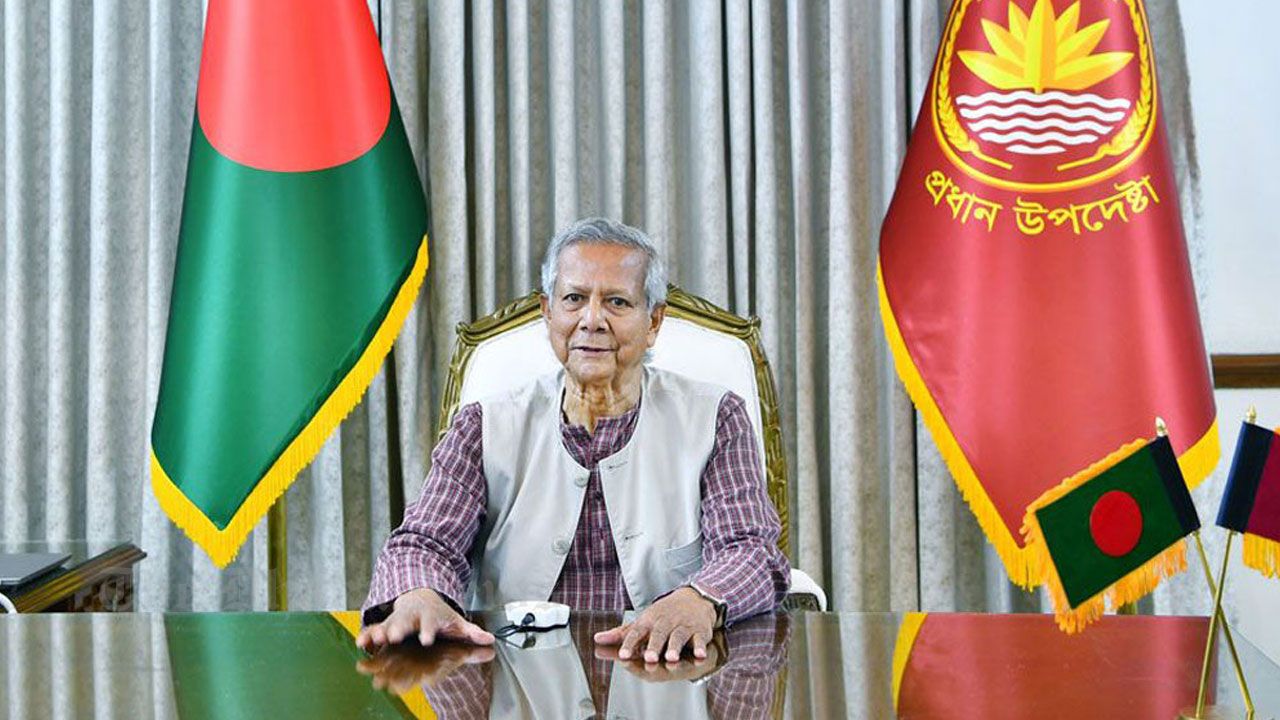
In the wake of the earthquakes felt several times last Friday and Saturday, the experts gave this opinion at an emergency meeting held at the office of the Chief Advisor on Monday under the chairmanship of Professor Muhammad Yunus.
In the meeting, the Chief Advisor called on the experts to give written advice on what the government should do in the shortest possible time.
He said, "We do not want to fold our hands, nor do we want to take any unscientific steps. Please give us your suggestions in writing quickly; the government is ready to take all necessary steps."
He also said that work is underway to form the necessary expert committees and one or more task forces. Activities will be taken accordingly as soon as the experts' advice is received.
The meeting was attended by Planning Advisor Wahiduddin Mahmud, Legal Advisor Asif Nazrul, Disaster and Relief Advisor Faruk-e-Azam, Energy Advisor Muhammad Fawzul Kabir Khan, Housing and Public Works Advisor Adilur Rahman Khan, Environment Advisor Syeda Rizwana Hasan and Special Assistant to the Chief Advisor Professor Ali Riaz.
The experts present were - Professor Md. Zainul Abedin of the Military Institute of Science and Technology (MIST); Professor Dr. Mehedi Ahmed Ansari of the Bangladesh University of Engineering and Technology (BUET); Professor Tahmeed Malik Al-Hussaini of BUET; Professor Md. Zillur Rahman of the University of Dhaka; Professor Dr. Jahangir Alam of the University of Chittagong; Professor Dr. Humayun Akhtar of the University of Dhaka; Professor Dr. Tanvir Manzoor of BUET; Bangladesh Meteorological Department Director (Current Responsibility) Md. Mominul Islam; Meteorologist Md. Rubaiyat Kabir; Geologist Dr. Reshad Md. Ikram Ali; Disaster Expert Dr. Md. Shakhawat Hossain, University of Dhaka; Director of the Disaster Management and Risk Management Institute of Dhaka University Md. Moniruzzaman Khan and Professor Israt Islam of BUET.
At the meeting, the Chief Advisor said, "The deaths and injuries in the terrible earthquake a few days ago are a very tragic event. We must prepare so that this does not happen again."
He also said, "You have written in newspapers, given advice, and shared experiences. It is the responsibility of all of us to protect the people from this panic. Tell the government what we need to do in this situation. Tell us what preparations we need to make, what awareness needs to be raised on. No matter how the accident comes, we can make all preparations in advance."
He said that experts also need advice on what kind of drills will be needed as preparation for an earthquake. Along with this, we also need to assess the level of preparedness for earthquakes.
The Chief Advisor also suggested coordination with Bangladeshi scientists and earthquake experts residing abroad. He said that the institutions working on earthquakes should increase coordination with foreign institutions.
He said that we have made an app called 'Shubechcha' for expatriate Bangladeshis. Connect with Bangladeshi scientists and experts residing abroad through this app. Also suggest us what other features can be brought to the app.
Experts said that many rumors have been created around the earthquake, especially on social media. It is being said that a major earthquake will occur within 48 hours... within 10 days... within 1 month, such misinformation is being spread.
At the meeting, Professor Dr. Zillur Rahman said that the source and origin of the earthquake should be reviewed and how many sources there are in and around Bangladesh and what the shaking level may be due to them.
He said, there is little chance of a major earthquake in Bangladesh. Because we are a low earthquake-prone area. However, we have to be adequately prepared.
Dhaka University Professor Dr. Humayun Akhtar said, it is important to use young people to create public awareness. We need to reach everyone by making plans at four levels - indoor, outdoor, individual and institutional. If we use young people to take natural hazard plans and technical initiatives, everyone will be able to prepare mentally.
CUET Professor Jahangir Alam said, the ministry can evaluate the facilities under their jurisdiction. Hospitals, educational institutions, electricity and gas connections - special emphasis should be given to these sectors. Launching earthquake programs in schools, colleges and universities will create awareness, not panic.
MIST Professor Md. Zainul Abedin said, everyone should be convinced that there is no need to panic. We have to work within our resources. More specific information about what to do should be reached to the people.
Chief Engineer (Civil) of the Public Works Department Md. Khalequzzaman Chowdhury said that a software has already started collecting pictures of buildings that have cracks due to the earthquake. More than two hundred buildings have been evaluated from this. Most of the cracks are visible in the partition walls. The software is quickly evaluating the cracked buildings and taking necessary measures later.
According to the decision of the meeting, the government will quickly discuss the written recommendations sent by the experts and form a task force. The task force, which will be formed to take immediate action regarding the earthquake, will include government and private officials and experts.
Tuesday, November 24, 2026
Published Date : November 24, 2025



Comments