.png)


The United States and Iran are set to resume talks in Switzerland over the ongoing Middle East conflict. Iranian negotiators arrived in the host city several hours before U.S. Vice President JD Vance, who is also traveling to participate in the discussions starting on Sunday.
Meanwhile, Tehran has announced that it is again closing the Strait of Hormuz in response to Israeli attacks in Lebanon.
U.S. Vice President JD Vance has also arrived in Switzerland to meet Iranian negotiators in renewed efforts to end the Middle East conflict. Speaking to reporters before boarding his Europe-bound flight, Vance said he hoped for progress on both the nuclear issue and the Lebanon ceasefire. “I think those are the two main issues we are going to focus on,” he said.
The planned talks were originally scheduled for Friday in Switzerland but were postponed at the last minute after Israeli strikes in Lebanon followed the killing of four Israeli soldiers.
Washington later announced a new ceasefire, which was part of an initial agreement with Iran. However, Israeli forces and Hezbollah fighters resumed clashes on Saturday, with both sides accusing each other of violating the ceasefire.
Citing alleged U.S. violations and what it described as “continuous and relentless breaches of the ceasefire by the Zionist regime in southern Lebanon,” Iran’s central military command announced that the Strait of Hormuz would be closed to navigation.
The Strait of Hormuz, a key route for oil and gas transport, has previously been blockaded by Iran during periods of conflict, causing major disruptions in global energy markets. Under a preliminary agreement signed between U.S. President Donald Trump and Iranian counterpart Masoud Pezeshkian, Tehran had agreed to reopen the passage, and maritime traffic had begun to normalize.
Following Iran’s announcement, U.S. Central Command stated that safe navigation in international waters remains “unaffected” and that U.S. forces remain “present and alert.”
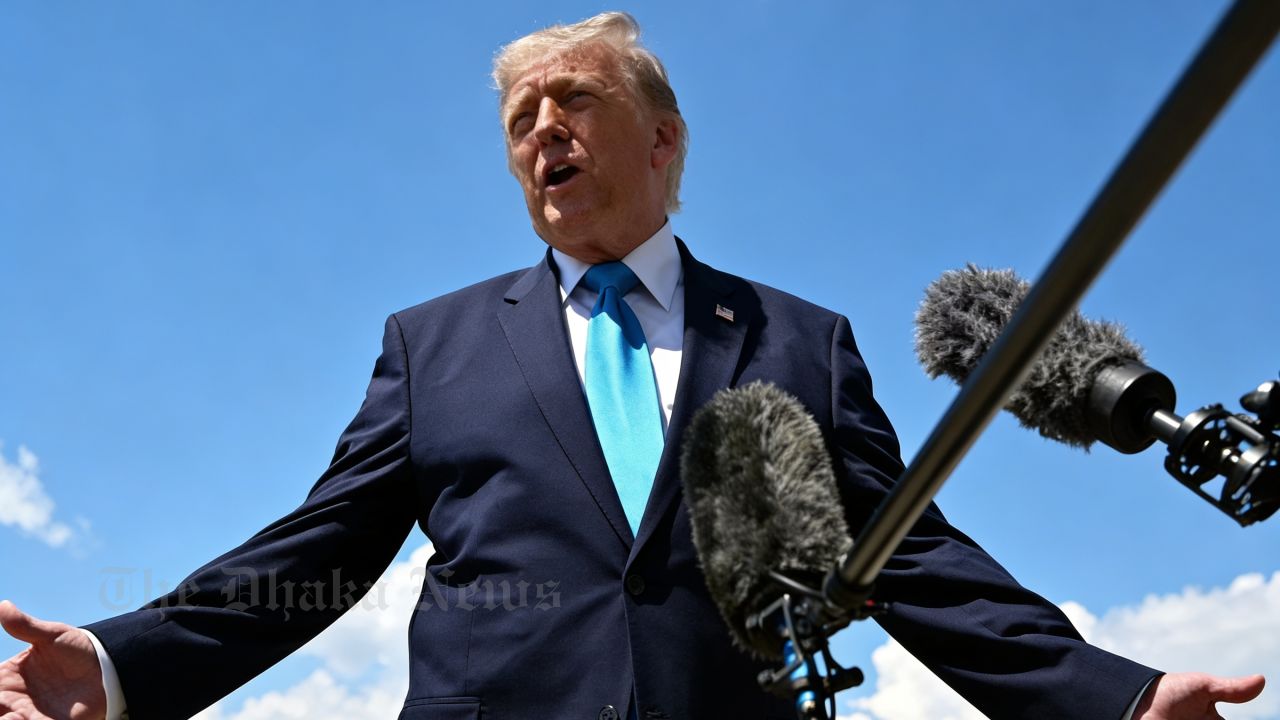
President Trump later warned that Washington could impose its own tolls in the Strait of Hormuz if negotiators fail to finalize a deal. Posting on Truth Social, Trump wrote, “If it is not imposed by the United States and for the United States, then there will be no toll.”
State media and the Swiss Foreign Ministry reported that an Iranian delegation arrived in Switzerland late Saturday night.
Iranian state broadcaster said the delegation includes Parliament Speaker Mohammad Bagher Ghalibaf and Foreign Minister Abbas Araghchi.
A Foreign Ministry spokesperson, Esmail Baghaei, said the delegation will demand that the other side fulfill its commitments under the agreement. He told the IRNA news agency, “Otherwise, the entire understanding will be in trouble.” Vance left Washington on an afternoon flight and said he would only stay for “one or two days.”
U.S. negotiators Jared Kushner and Steve Witkoff are already handling “technical aspects” on the ground and said “things are going well,” Vance told Fox News.
Mediator Pakistan whose Interior Minister was reportedly in Iran for meetings with officials said that “technical-level talks” are scheduled to take place on Sunday in Bergenstock, Switzerland, involving U.S. and Iranian representatives, along with Pakistani and Qatari mediators.
The talks aim to address unresolved issues in the preliminary agreement, particularly Iran’s nuclear program, and are expected to begin a two-month negotiation process.
Fighting continued in southern Lebanon on Saturday, with Israel and Hezbollah trading accusations.
The Israeli military said one of its soldiers was killed in the clashes, marking the fifth such death since the U.S.–Iran agreement was signed.
An Israeli military official later said that political leadership had ordered the armed forces to respect the ceasefire. He added that troops were not conducting active attacks but operating defensively within a security zone.
Earlier, an Israeli military source said fighting resumed after Hezbollah fired more than 50 rockets into southern Lebanon overnight.
Hezbollah accused Israel of attempting to advance toward the strategically important Ali Taher Hill near Nabatieh under the cover of the ceasefire and said its fighters responded with appropriate weapons. Lebanese state media reported Israeli airstrikes on around 20 locations, with authorities confirming more than 30 deaths. The health ministry said the total death toll in Lebanon has now exceeded 4,000 amid ongoing conflict.
Hezbollah lawmaker Hassan Fadlallah said, “This enemy, when it attacks us, gives us full right to respond.”
U.S. Ambassador to Israel Yechiel Leiter claimed Hezbollah violated the ceasefire and said Israel was acting in self-defense against “terrorist attacks.” Hezbollah, however, said Israel bears 'full responsibility.'
Fadi Zayat, a resident who fled the southern Lebanese town of Tayr Debba, told AFP that fear continues to dominate life in the south.
"We returned to our village a few days ago, but our bags are packed again in case we need to flee," said the 53-year-old. He added, “Fear has not gone away.”
Hezbollah launched rockets at Israel in early March in retaliation for U.S.-Israeli strikes that killed Iran’s Supreme Leader, further dragging Lebanon into a wider regional conflict.
A previous ceasefire due to take effect in April was never fully respected, with both sides repeatedly citing violations to justify renewed hostilities.

বুধবার, ২৪ জুন ২০২৬
Published : ২১ জুন ২০২৬


Stay connected with The Dhaka News